The same investors who built their fortunes spotting gaps between narrative and reality are now doing it again. The gap right now is enormous — and it points directly to land.
When the Founder Admits the Thesis Was Wrong
Last week, OpenAI CEO Sam Altman stood before an audience of Australian bank executives and said something that should have rattled every CFO in America: he was wrong. Not about the technology, he still believes in that. He was wrong about the economics. The mass displacement of white-collar workers that justified the urgency, the investment scale, and the valuation cascade? He's now "delighted" it didn't happen.
That single admission deserves more scrutiny than it has received.
The value proposition that enterprise customers were sold that AI would replace expensive human labor at scale, delivering measurable ROI within 12 to 24 months is not materializing. Uber's CTO burned through the company's entire 2026 AI budget and is, as reported by The Information, "back to the drawing board." Nvidia's own VP of Applied Deep Learning told Axios that "the cost of compute is far beyond the costs of the employees." Goldman Sachs issued a research note finding companies are overrunning their AI inference budgets by orders of magnitude. A National Bureau of Economic Research study from February 2026 found that 90% of firms deploying AI reported no measurable impact on workplace productivity.
Let me say that plainly: the technology costs more than the humans it was supposed to replace, and it isn't replacing them anyway.
The Circular Economy Nobody Is Talking About Loudly Enough
Here is the structure of what is actually happening:
Microsoft invests in OpenAI. OpenAI buys compute from Microsoft Azure. Microsoft reports AI revenue growth. OpenAI's valuation goes up. SoftBank, Amazon, and Nvidia invest in OpenAI at the higher valuation. OpenAI commits to more compute spend. Infrastructure revenues go up. Valuations go up again.
Bloomberg analyzed this dynamic explicitly in a March 2026 investigation, describing how companies with major shareholders who are also suppliers face distorted incentives "more likely to keep buying their stuff whether or not it makes commercial sense." This is not conspiracy theory. It is documented capital recycling, dressed up as sector growth.
Meanwhile, AI-related stocks have driven approximately 75% of S&P 500 returns since 2022. AI investment now accounts for roughly half of U.S. GDP growth, according to analyst estimates. The system has become so self-referential, so systemically embedded, that the people managing it cannot afford to let the narrative falter even as their own executives privately confirm it is not performing as sold.
This Is a Pattern. It Has a Name.
The internet was real in 2000. The productivity gains it promised were real they just took a decade longer than the capital markets priced in. In the interim, 95% of the companies that raised capital on that thesis were wiped out.
The DeepSeek shock in January 2026 when a Chinese open-source model matched top U.S. performance at a fraction of the cost erased $600 billion in Nvidia's market cap in a single session. The market recovered. But the signal was clear: the moat is smaller than the valuation implies, and the infrastructure buildout may be structurally larger than what the underlying demand can support.
Michael Burry, the investor who famously shorted the 2008 housing bubble, has put on a short position against Nvidia. His thesis is not complicated: at some point, someone asks what all these GPUs are actually doing.
That question is already being asked in enterprise boardrooms. When the answers start arriving in earnings calls, the repricing will not be orderly.
So Where Does Intelligent Capital Go?
This is not a prediction that AI dies. It is an observation that assets priced on a narrative that is now being walked back by its own architects carry risk that is not currently reflected in their valuations.
The capital that has been flowing into AI infrastructure does not evaporate. It rotates. And historically, when equity markets overprice intangible-heavy, narrative-driven assets, sophisticated capital moves toward the opposite: scarce, tangible, irreplaceable, cash-flowing real assets in locations that are structurally supply-constrained.
Which brings me to the Monterey Peninsula.
What Hard Assets Actually Mean in 2026
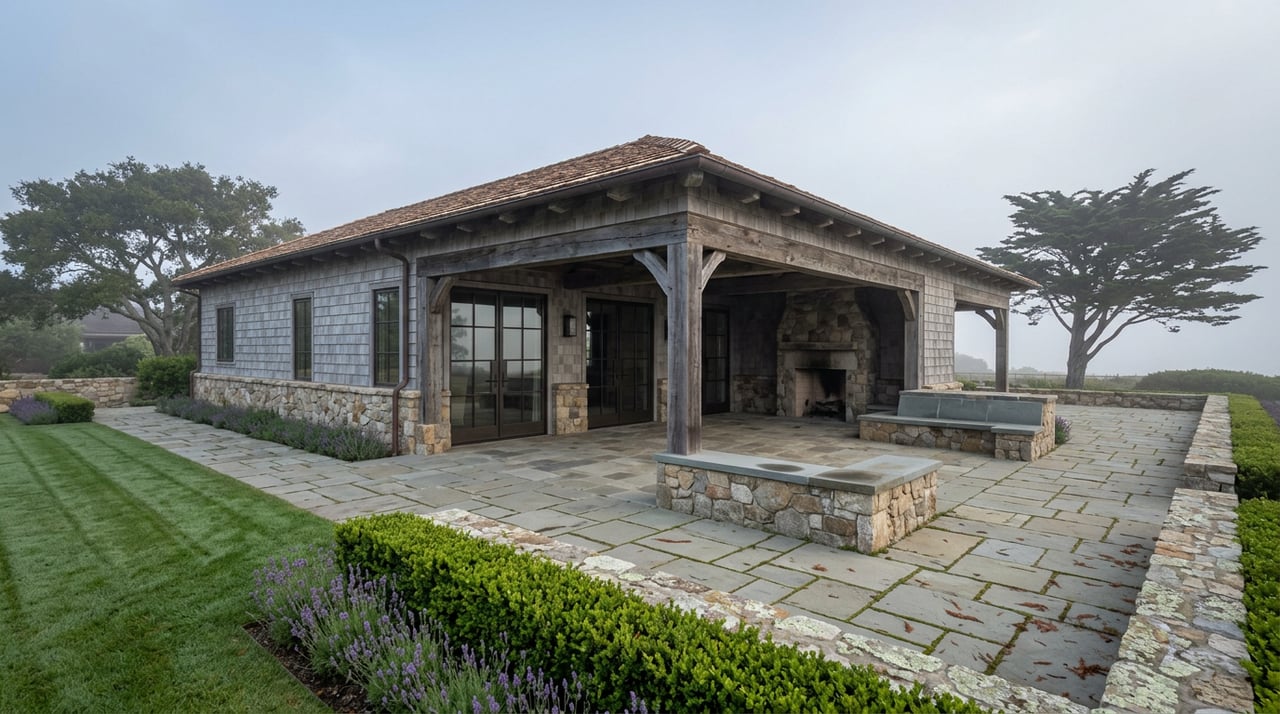
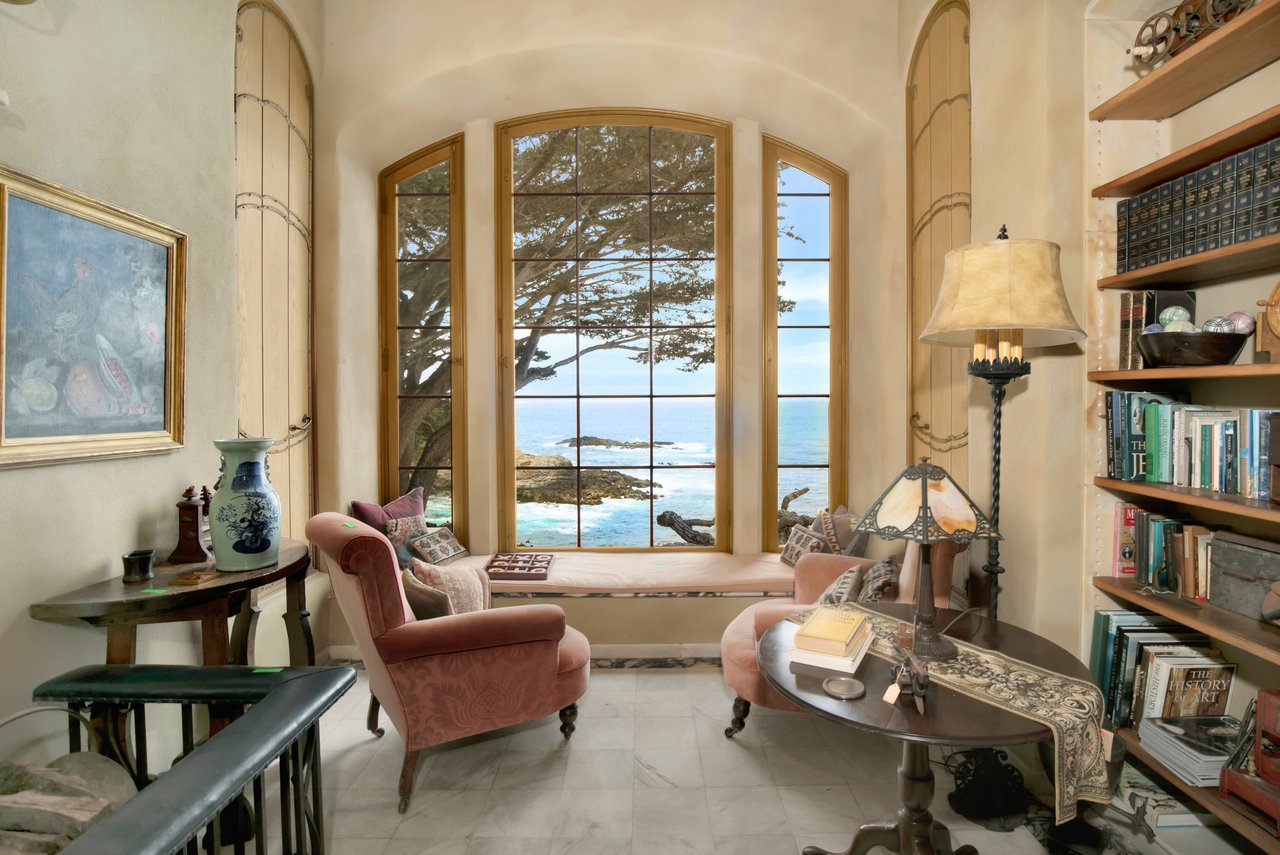
There are places in the world where the land cannot be replicated, the entitlement environment makes new supply functionally impossible, and the desirability is driven by something no algorithm can manufacture: genuine natural scarcity, climate, beauty, and proximity to the kind of community that the world's most accomplished people actually want to belong to.
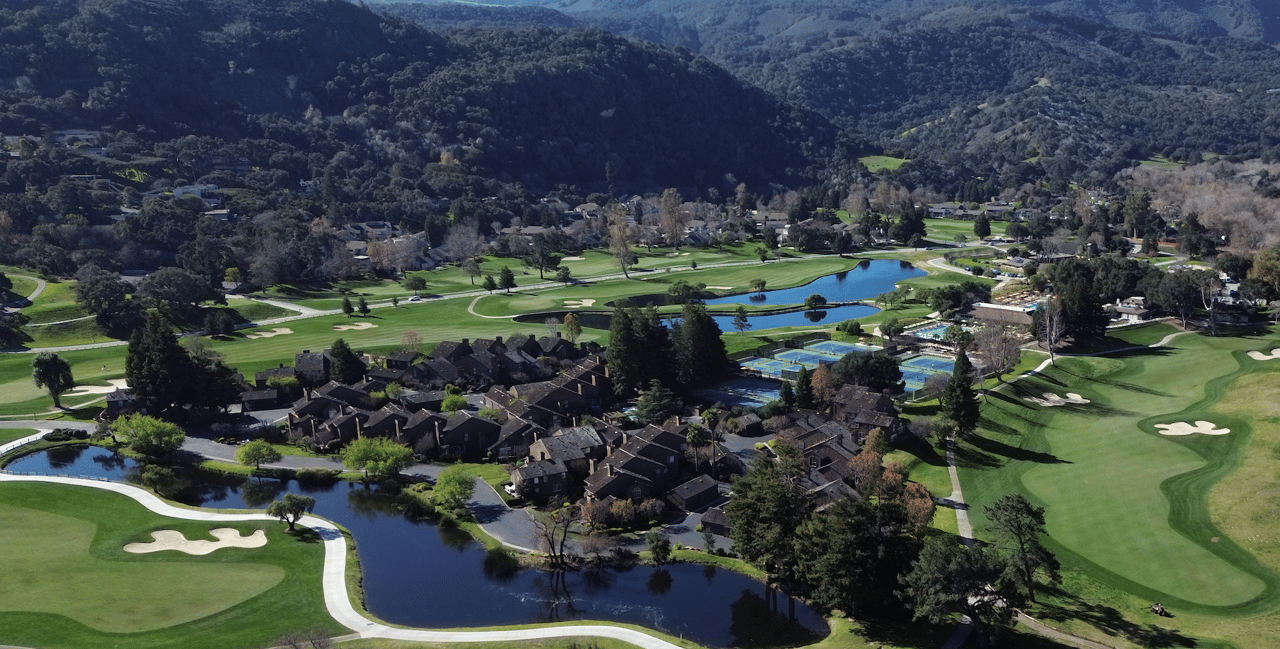
Carmel-by-the-Sea. Pebble Beach. Carmel Highlands. Big Sur. Carmel Valley.
I was born here. I have spent nearly two decades watching how this market behaves across cycles. It does not behave like San Francisco. It does not behave like Miami or Aspen during their hype cycles. It behaves like what it is: a globally finite asset with a buyer pool that is composed disproportionately of people who make decisions based on fundamentals, not momentum.
When equity markets become unstable, this market does not collapse. It consolidates. Owners hold. The inventory, already structurally limited by coastal regulation and geography, gets tighter. Buyers who have been watching from the sidelines the ones who built their wealth by being early to the right thesis begin to move.
I am watching that happen right now.
The Specific Characteristics That Make This Market Different
Supply is structurally constrained, permanently. Coastal Commission regulations, protected lands, the physical geography of the Peninsula, these are not temporary zoning issues. They are permanent limits on what can be built. When inventory tightens, it does not recover the way a suburban market does.
The buyer pool is globally diverse and domestically resilient. The demand here is not driven by one industry, one geography, or one macro trend. It is driven by people who want the best of something rare. That buyer pool is global.
The properties that trade at the top of this market are generational assets. The DL James House. The great estates of Pebble Beach. Bien Sur. These do not come to market on a schedule. When they do, the buyers who are positioned and ready are the ones who move.
The Engel & Völkers global network matters here in a specific way. As domestic HNW capital seeks diversification and as the AI equity narrative softens we are actively connecting buyers seeking hard asset repositioning with inventory that simply does not exist in comparable form anywhere else in the world.
The Bottom Line for High-Net-Worth Buyers Reading This
If you have capital concentrated in AI-adjacent equities or infrastructure plays, I am not telling you the world is ending. I am telling you that the smartest capital I have watched over two decades of working with sophisticated buyers does not wait for confirmation. It moves on signal.
The signal right now is: the CEO of the most important AI company in the world just told a room full of bankers that the core economic promise of his industry did not materialize the way he predicted. That is a signal.
The Monterey Peninsula is not going to be cheaper in five years. The entitlements are not going to get easier. The land is not going to get more plentiful. And the people who want to be here the ones who actually understand what they are buying are not going away.
The question is whether you are positioned before that becomes consensus.
Zak Freedman is co-principal of Truszkowski Freedman & Associates, a license partner of Engel & Völkers on the Monterey Peninsula. TFA holds over $1 billion in closed sales volume, including notable transactions such as the $40M record-setting DL James House sale in Carmel Highlands. Zak is a Carmel native, a CA DRE licensed broker, and holds an FAA commercial drone pilot certification.
For a private conversation about positioning in this market, contact Zak directly.